
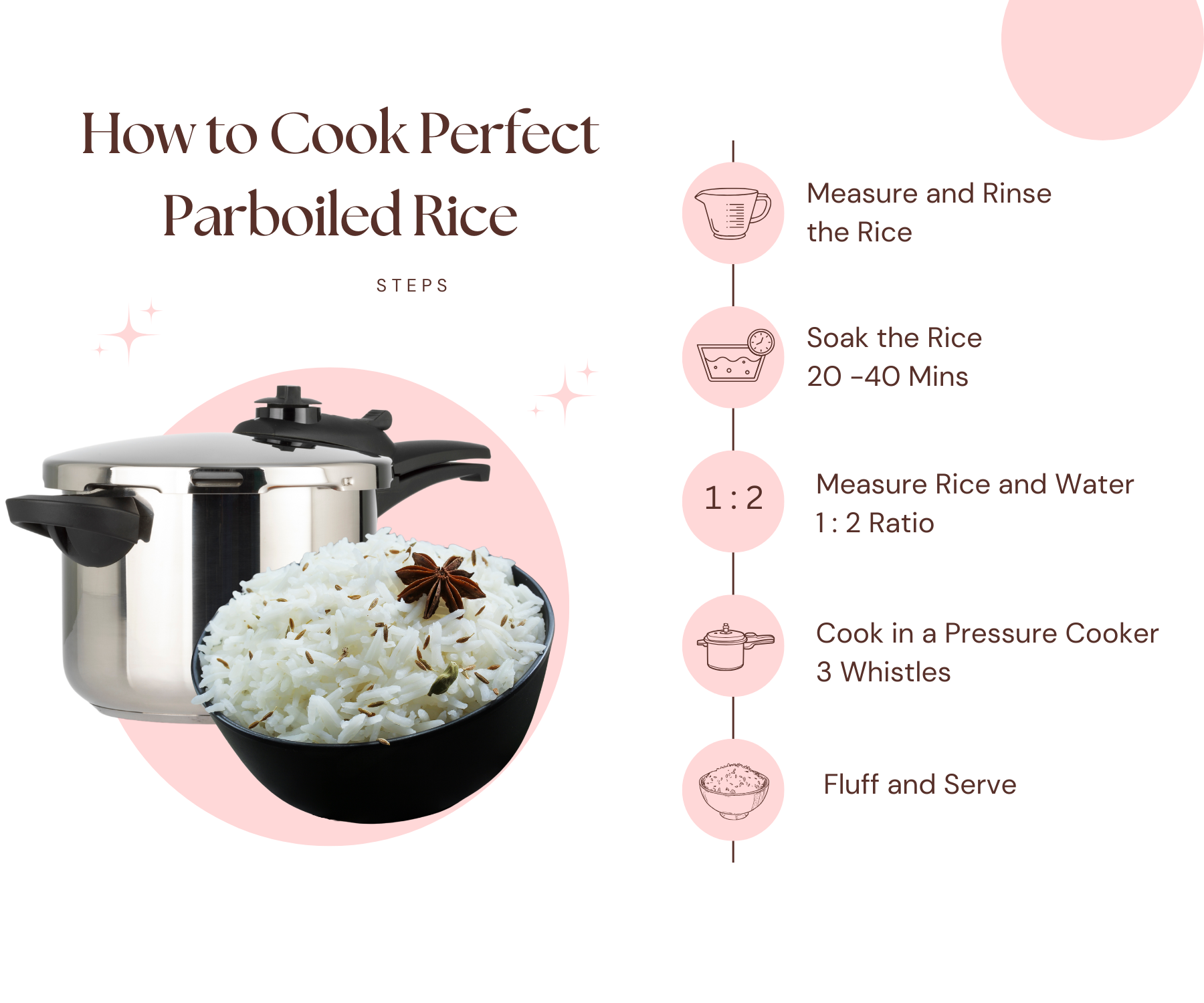
Parboiled rice is stronger and less sticky than raw white rice, but it needs the right prep. Rinsing, soaking, and resting after cooking are the three details that make the biggest difference.
1:2Rice to water ratio
20-40 minSoak before cooking
3 whistlesPressure cooker timing
Ingredients
- 1 cup parboiled white rice, such as Ponni parboiled rice
- 2 cups clean water for cooking
- Extra water for rinsing and soaking
- Optional: a small pinch of salt
Step-by-step method
- Rinse the rice. Wash the rice 3 to 5 times until the water becomes clearer. This removes excess surface starch.
- Soak before cooking. Soak for 20 to 40 minutes. This helps the grain cook evenly and reduces hardness in the center.
- Measure water correctly. For pressure cooking, use 1 cup rice to 2 cups water.
- Pressure cook. Cook on high flame until the first whistle, then reduce to low flame and cook for two more whistles.
- Rest naturally. Switch off the flame and let pressure release naturally. Do not force-release immediately.
- Fluff gently. Open the cooker, wait a minute, then fluff with a fork or flat spoon.
Texture tip:
If the rice feels too firm, increase soaking time before increasing water. Too much water can make parboiled rice heavy instead of fluffy.
Common mistakes
- Skipping the soak and then adding too much water to compensate.
- Opening the cooker before natural pressure release.
- Stirring aggressively while the rice is still very hot.
- Using the same water ratio for every rice variety without testing once.
Final result
When done correctly, parboiled rice should be cooked through, separate, and soft without becoming mushy. For daily cooking, keep the same cup for measuring rice and water so the result stays consistent.